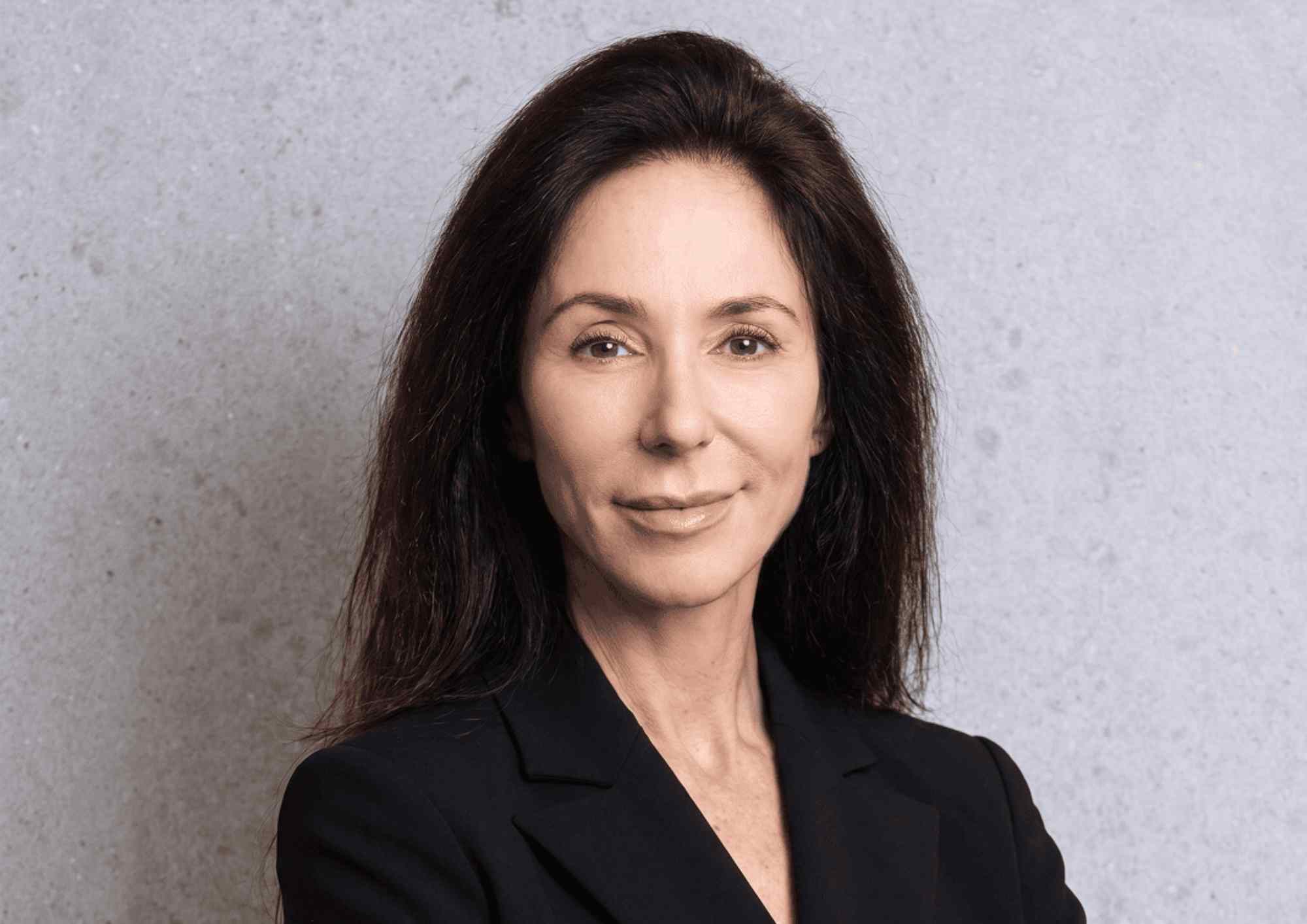
Mercedes García-Ayuso, formerly of Citi and Goldman Sachs, joined Insigneo in October of this year as Chief Investment Products Officer and a member of its Executive Committee, with responsibility over investment products, portfolio solutions, and insurance. The executive, who reports to Raúl Henríquez, CEO and Chairman of the Board, spoke with Funds Society on the sidelines of the Regional Event for Latin America, held in Rio de Janeiro, Brazil. There, she explained what led her to take that step and how she plans to translate the CIO’s vision into the product offering.
The decision to join Insigneo—she assured—is explained by several factors. First, Insigneo’s dynamism and its commitment to Latin America. “The understanding of the Latin American market is extraordinary,” she noted, adding that it is “very difficult to find this at other larger institutions that are global,” just like growth. “It is in this firm’s DNA,” she maintained. According to García-Ayuso, “there are still so many possibilities to grow in Latin America, so many opportunities; it was the growth opportunity, the opportunity to build new things, that brought me here.”
The executive’s arrival comes at a particularly relevant moment for the U.S. firm specializing in international wealth management: during 2026, it has accelerated its expansion across the Americas and, in particular, its presence among Latin American clients with international wealth. In June, Insigneo completed the integration of the client accounts of VectorGlobal Wealth Management Group and its Registered Investment Advisor. The transaction brought in nearly $4B in client assets and lifted total assets supported by the platform to approximately $37B, with more than 500 investment professionals and more than 32,000 clients.
In her new role, García-Ayuso will be in charge of investment products and solutions, including insurance. Her job, she explained, consists of creating products and solutions for FAs (Financial Advisors) and “connecting the CIO’s vision with the investment product lineup.” She will also have to think about how to position the platform ahead of structural changes in the industry, which are visible “very clearly in the United States and increasingly in the Latam market, outside the United States.”
According to the executive, this is a market with ever-fewer barriers to entry regarding access to information and products, meaning the advisor’s competitive advantage will revolve more “around adjacent services and investment advice.” Her role, she summarized, will be “to help the FA along that path.”
What advisors are asking for
With barely 1 month in the role, she acknowledges that she is at a very early stage of conversations with advisors and underscores that markets are very different: “Speaking with an FA based in Miami is very different from speaking with one in Uruguay.” Even so, she believes that what they initially need is a connection to the CIO’s vision and help navigating the platform, which she described as “very broad” and “very flexible.” And she compared it to those she has seen in the high-net-worth segment: “It has absolutely nothing to envy, frankly,” she asserted.
On the other hand, among the segments with the greatest opportunity, she mentioned alternatives, with a focus on education and on how to position them within a portfolio. She warned that access vehicles today are “much more liquid” than 5 or 6 years ago, something she considered “a double-edged sword.” She also sees room for growth in advisory solutions and discretionary models.
Regarding these latter points, García-Ayuso maintained that the key is “not to react to change, but to anticipate change.” She sees this clearly in the United States, where generational transfer is changing the way investors want to implement their investments, which is why she believes the advisory model “is going to gain more and more momentum.” She acknowledged that in the Latin American offshore market it is not yet seen quite as clearly, but she considered that changes “are accelerating and will move faster and faster,” especially with the generational wealth transfer. “But advisory also doesn’t have to be all or nothing,” she clarified—advisory and brokerage solutions can coexist within the same investment portfolio.
Along those lines, she defined herself as “a staunch advocate of a Core-Satellite strategy.” The core, she explained, is “the backbone” of the portfolio and can be implemented with a discretionary model, which falls under an advisory fiduciary framework. The satellites are structured notes, equity trading, individual bonds, and, if the client wants, private equity and real estate.
What Insigneo offers compared to major banks
When asked by Funds Society about the elements that can differentiate the firm’s value proposition from other institutions, García-Ayuso highlighted the breadth of the platform, both in mutual funds and in alternative investments. In the latter, she noted that the platform offers access to a variety of investment strategies and structures, subject to availability, eligibility, and applicable terms and conditions. She added that certain strategies may not be available on other platforms due to, among other factors, differences in selection processes, scale requirements, eligibility criteria, and the characteristics of each platform.
In turn, García-Ayuso explained that Insigneo has discretionary asset allocation models that incorporate the views of the CIO group, offering a structured mechanism to implement specific investment views within the parameters established for each model. She also highlighted that these models can operate within defined underweight and overweight ranges, allowing asset allocation adjustments to be made in accordance with the strategy and parameters of the model.
Following the presentation by Ahmed Riesgo, the firm’s CIO, during the event held in Brazil, García-Ayuso previewed 1 of the lines of work currently being explored. Some of the trends presented may differ from certain market outlooks, while others, such as healthcare and longevity, may align to a greater extent with certain market perspectives. As she explained, the firm is exploring how to incorporate this set of trends and thematic investments into portfolios in an accessible manner consistent with the CIO’s investment views, as appropriate and subject to the characteristics, objectives, and risks of each strategy.
What she looks for in asset managers
From asset managers looking to join the platform, she asks for a distinctive trait. “There is always absolutely room to keep seeing new ideas,” the executive stated, but she asked for “something that is differentiating, not just another me-too strategy,” unless it has “absolutely extraordinary performance.” She also values a manager having specialized expertise, whether by sector or by geography.
Regarding ETFs, she noted that they can play a role within certain investment strategies and asset allocation models. In Insigneo’s case, she explained that some of its discretionary asset allocation models are implemented entirely through ETFs.
When asked if she has ever had to hold back a product that fascinated her because it was not suitable for the client, García-Ayuso replied that she has a responsibility she takes “very seriously”: ensuring that what is recommended makes sense for the person receiving it. She drew on game theory taught in business schools: in a relationship that repeats month after month, year after year, “the interest of the person sitting across from you is paramount.” The same holds true, she said, for investment products and for everything put on the table.